Topics
Explore canonical blockchain concepts and their relationships.
ExploreBlockchain knowledge is scattered across documentation, white papers, tutorials, research, books, repositories, and thousands of websites. The Blockchain Library brings those pieces together through a structured Knowledge Engine that connects concepts instead of treating every page as an isolated resource.
Explore canonical blockchain concepts and their relationships.
ExploreBrowse structured definitions across blockchain, Web3, DeFi, infrastructure, security, enterprise technology, and AI.
ExploreFollow structured learning paths from foundational concepts to advanced infrastructure.
ExploreMove from concepts into architecture, code examples, APIs, RPC, smart contracts, and integrations.
ExploreDiscover long-form learning resources connected directly to relevant concepts.
ExploreExplore technical and academic research connected to the wider knowledge graph.
ExploreUse structured prompt patterns and AI-ready knowledge resources.
ExploreDiscover how blockchain concepts relate to one another.
ExploreStructured paths to take you from beginner to expert

Explore decentralized finance in depth — from DEXs and AMMs to lending, stablecoins, and yield farming. Understand the mechanics, the opportunities, and critically, the risks. For intermediate learners.

Understand the decentralized internet — what Web3 is, how it differs from Web1 and Web2, and the key technologies (smart contracts, DAOs, NFTs) that power it. Ideal for those who grasp blockchain basics.

Start from zero and build a solid foundation in blockchain technology. This path covers what blockchain is, how it works, consensus mechanisms, and the fundamentals of cryptocurrency — perfect for complete beginners.
Fresh educational content, continuously updated

Artificial intelligence is moving beyond answering questions. AI agents can now conduct research, write software, analyze markets, create content, manage workflows, communicate with other systems, and complete increasingly complex tasks with limited human intervention. The next generation of agents

Five Books, Five Days: Download the Complete Mastering Crypto Series Free Cryptocurrency, blockchain, decentralized finance and Web3 are reshaping how people think about money, ownership, security and the internet. Yet for many people, entering this rapidly changing world can feel overwhelming. Wher

Artificial intelligence can already write software, analyze markets, create content, conduct research, communicate with customers, and coordinate increasingly complex activities. It can help an individual operate a business that once required an entire team. It can evaluate thousands of documents in

For most of computing history, software has waited for us. Open the program. Enter the information. Click the button. Choose the option. Confirm the action. Software responds. Even many of today’s most advanced digital systems still operate according to this basic model. A human initiates an a

Cloud computing changed technology forever. Before the cloud became mainstream, building serious digital infrastructure often meant buying physical servers, maintaining hardware, managing data centers, estimating future capacity, and making large investments before knowing whether a product would su
The modern economy increasingly runs on connections. Not roads. Not railways. Not even websites. Connections between software. A payment platform connects to a bank. An e-commerce store connects to a shipping provider. A mobile application connects to a mapping service. An AI assistant connects to a
Real-time headlines from across the blockchain industry
Experts writing accurate, neutral, well-referenced content

Jason Ansell
Blockchain
Andreas M. Antonopoulos
Antony Lewis
Michael J. Casey and Paul Vigna
Nik Bhatia
Imran Bashir
The platform in numbers
The core
At the center of The Blockchain Library is a structured Knowledge Engine. Instead of treating blockchain education as disconnected pages, the platform organizes information into canonical knowledge objects with stable identities and explicit relationships.
Blockchain concepts do not exist in isolation. Explore how thousands of definitions, technologies, research papers, books, developer resources and learning materials connect through The Blockchain Library Knowledge Graph.
Learn blockchain
Follow structured learning paths that take you from first principles to advanced infrastructure — with every concept connected to definitions, research, and code.
Blockchain glossary
Understand blockchain terminology without navigating promotional definitions, fragmented documentation, or unexplained jargon. The Blockchain Library glossary provides structured definitions designed to connect directly to related concepts and deeper learning resources.
Build with blockchain
The Blockchain Library connects educational concepts with practical developer resources — architecture, code examples, RPC infrastructure, and integration patterns.
Books
Go deeper with long-form resources. Each book is connected directly to the Knowledge Engine — linking concepts, research, and learning paths.
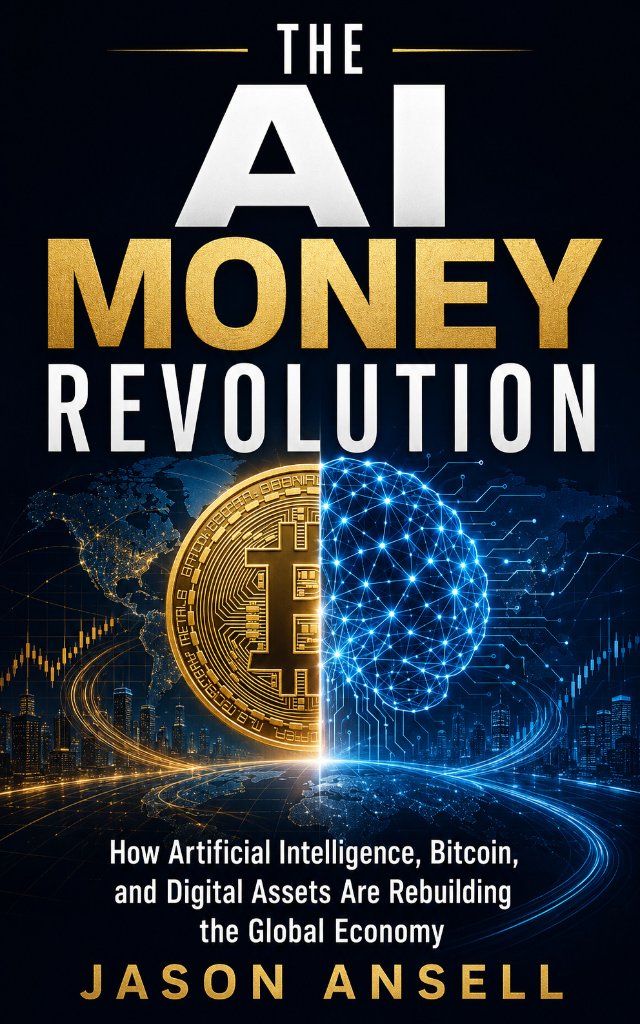
How Artificial Intelligence, Bitcoin, and Digital Assets Are Rebuilding the Global Economy
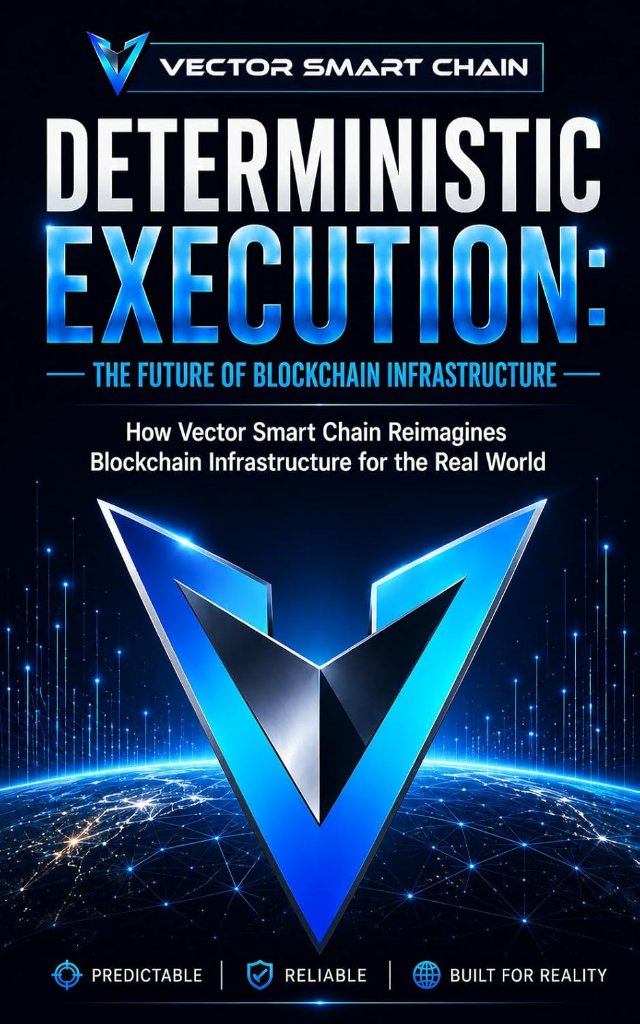
How Vector Smart Chain Reimagines Blockchain Infrastructure for the Real World
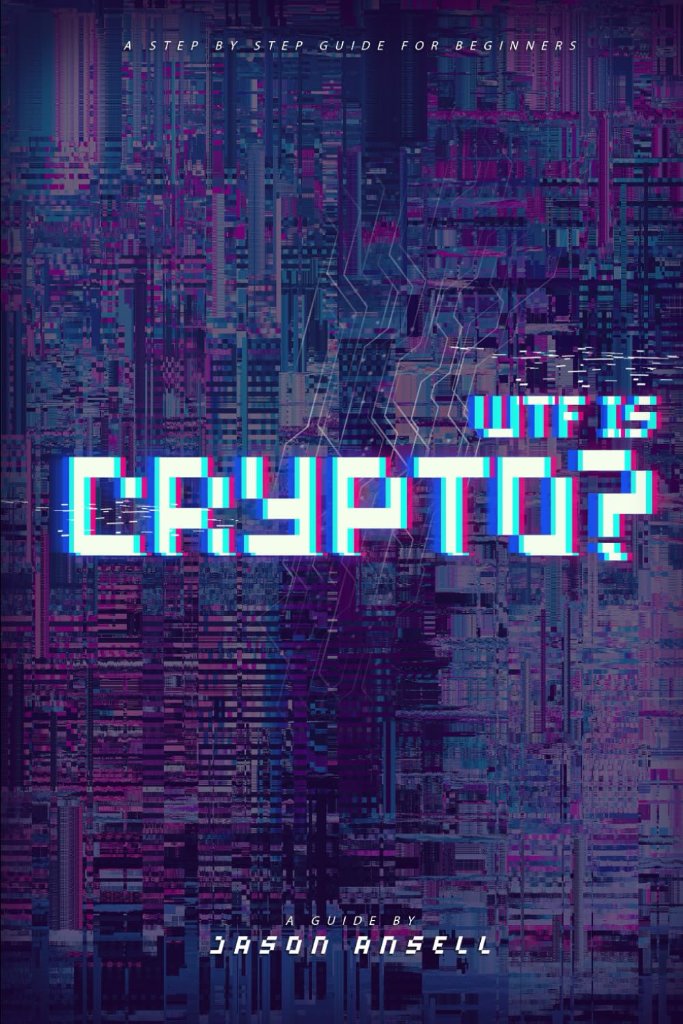
A Step-by-Step Guide for Beginners

How to Spot and Avoid Crypto Scams
Research
The platform connects research directly to relevant topics — so every paper sits inside the wider knowledge graph rather than as an isolated document.
Jason Ansell
This paper examines the architectural and economic implications of deterministic execution environments and fixed-cost transaction models in Layer-1 blockchain infrastructure systems. As blockchain networks transition from speculative financial instruments toward operational infrastructure substrates, the unpredictable nature of dynamic gas pricing mechanisms and non-deterministic execution environments presents fundamental barriers to enterprise adoption and machine-oriented coordination systems. We analyze validator coordination architectures, execution environment design patterns, and transaction cost modeling frameworks through the lens of distributed systems reliability engineering. Drawing on Vector Smart Chain (VSC) as a representative implementation framework, we explore how fixed-fee transaction models eliminate cost uncertainty while enabling predictable infrastructure cost planning for autonomous agents, enterprise systems, and machine-to-machine coordination protocols. The paper further examines the convergence of AI-driven coordination systems with deterministic blockchain execution environments, proposing that predictable, low-variance execution guarantees represent a necessary precondition for the emergence of autonomous machine economies operating at scale. We conclude with a systems-oriented framework for evaluating Layer-1 blockchain infrastructure suitability for enterprise deployment and machine economy participation, with particular attention to settlement finality guarantees, validator fault tolerance, and execution cost predictability across heterogeneous workload environments.
Dylan Yaga, Mellisa Freeman, Nik Roby, Karen Scarfone
NISTIR 8401 serves as an authoritative survey on the integration of blockchain technology within global supply chain management. The report examines how DLT can enhance transparency, traceability, and efficiency in complex logistical networks. It categorizes use cases into critical areas such as asset provenance, document verification, and multi-party coordination, evaluating both the potential benefits and the technical constraints. The authors provide a balanced analysis, contrasting public permissionless blockchains with private permissioned ledgers, and highlighting trade-offs regarding decentralization, throughput, and privacy. NISTIR 8401 also delves into the technical requirements for interoperability, identity management, and data integration with legacy systems like ERP platforms. This document is particularly valuable for enterprise architects and policy advisors because it emphasizes the need for evaluating whether a blockchain is the correct technological solution for a specific problem, rather than adopting it solely for its novelty. By identifying key technical elements such as consensus mechanisms, smart contract functionality, and oracle integration, the report acts as a practical manual for assessing feasibility, designing pilots, and managing risks within supply chain digital transformation projects.
Richard Meissner, Robert Chen, Paco de la Cruz
ERC-7512 introduces a standardized, on-chain format for publishing smart contract audit reports. Traditionally, audit reports are stored as off-chain PDF documents, making it difficult for users or automated systems to programmatically verify the security status of a contract. This standard defines a schema for an 'Audit Report' contract that maps the audited code, the auditing firm, the scope of the review, and the conclusion to a consistent structure on the blockchain. By providing a common interface, ERC-7512 allows dapps, user interfaces, and even other protocols to query whether a specific contract version has been audited and by whom. This infrastructure fosters a more transparent security ecosystem where audit validity is verifiable in real-time. The standard includes mechanisms for linking reports to specific source code hashes and on-chain bytecode, ensuring that the audit results correspond to the actual code deployed. This initiative is a significant step toward institutionalizing security and increasing user confidence in decentralized finance by turning static security assessments into live, queryable data points that support automated security verification.
AI-ready knowledge
The Blockchain Library is designed so the same canonical knowledge can support human learning, search, developer tools, AI assistants, and future applications.
The Knowledge API and AI Tutor are designed to support future applications and are part of the project roadmap — not all capabilities are publicly available yet.
AI & Knowledge ArchitectureOpen source
The Blockchain Library is developed openly on GitHub. The repository includes the Knowledge Engine, canonical data model, documentation, validation tools, generation pipelines, learning resources, governance, architecture, editorial standards, and project roadmap.
Project status
Get curated articles, new glossary terms, book recommendations, and research highlights delivered weekly.
No spam. Unsubscribe anytime.