
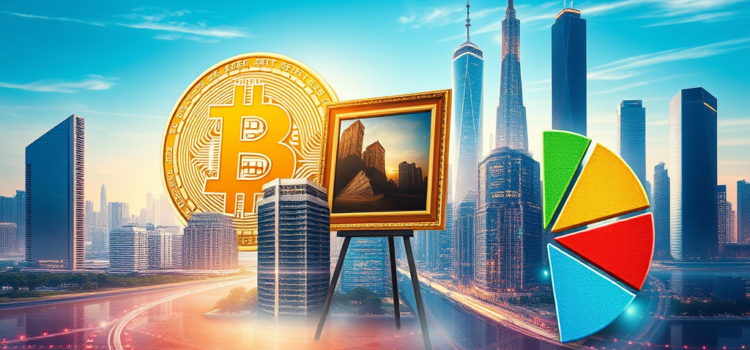
Traditional investments like stocks and bonds are no longer the only paths to wealth. In 2025, alternative investments such as crypto, fine art, fractional real estate, and tokenized assets are gaining momentum.
🚀 Which alternative assets are thriving in 2025?
🔗 How does blockchain enable fractional ownership and tokenization?
💰 Are these investments less risky than traditional markets?
Let’s dive into emerging asset classes and how technology is reshaping investment strategies.
1. What Are Alternative Investments?
Alternative investments refer to non-traditional assets that provide diversification outside stocks and bonds.
🔹 Top Alternative Investment Categories in 2025:
✅ Cryptocurrencies & DeFi – Bitcoin, altcoins, staking, and yield farming.
✅ Tokenized Real-World Assets (RWAs) – Fractional ownership of real estate, commodities, and businesses.
✅ Fine Art & Collectibles – Physical and NFT-based art investments.
✅ Private Equity & Venture Capital – Investing in early-stage Web3 startups.
✅ Precious Metals & Commodities – Gold, silver, and sustainable green energy investments.
📌 Key Takeaway: Alternative assets are becoming more accessible thanks to tokenization and fractional ownership.
2. Crypto & DeFi: The Most Accessible Alternative Investment
- DeFi lending, staking, and yield farming provide passive income.
- Stablecoins offer low-risk alternatives to volatile cryptocurrencies.
- Bitcoin and Ethereum remain long-term hedges against inflation.
📌 Key Takeaway: Crypto continues to be a leading alternative investment, especially with DeFi innovations.
3. Fractional Real Estate: The Rise of Tokenized Property
Real estate investing is becoming more accessible through blockchain-based fractional ownership.
- Platforms like RealT and Lofty allow investors to own fractions of properties via tokenized shares.
- Tokenization removes the need for large capital, making real estate investing more liquid and affordable.
📌 Key Takeaway: Blockchain is democratizing real estate investment through fractional ownership.
4. Fine Art & Collectibles: Physical & Digital Investing
- NFT art platforms like SuperRare & OpenSea allow investors to buy tokenized artwork.
- High-value collectibles like classic cars, rare watches, and physical art are seeing increased demand.
📌 Key Takeaway: NFTs and blockchain technology are making art investing more transparent and accessible.
5. Private Equity & Web3 Startups
- Early-stage investments in blockchain, AI, and Web3 startups are booming.
- Platforms like Republic and AngelList provide access to tokenized venture capital opportunities.
📌 Key Takeaway: Private equity investing is shifting to the blockchain, offering investors new opportunities.
WTF Does It All Mean?
🔥 Alternative investments are evolving with technology, making once-exclusive asset classes more accessible.
✅ Crypto and DeFi offer high-reward opportunities.
✅ Tokenized real estate and art democratize ownership.
✅ Web3 startups and private equity offer new growth potential.
🚀 Would you invest in tokenized assets or prefer traditional markets? Let’s discuss!
For more investment insights, crypto trends, and alternative asset strategies, visit jasonansell.ca.
Key Takeaways
- 1Alternative assets are becoming increasingly accessible due to blockchain-driven tokenization and fractional ownership models.
- 2Cryptocurrencies and DeFi platforms remain central to alternative investment portfolios through staking and yield farming.
- 3Blockchain platforms are democratizing real estate by allowing investors to purchase tokenized shares of physical properties.
- 4NFTs and digital platforms have increased transparency and ease of access for investing in fine art and collectibles.
Frequently Asked Questions
What are alternative investments?
How does blockchain facilitate fractional real estate investment?
What is the role of tokenization in alternative assets?
Related Glossary Terms
Fractional Ownership
A structure where multiple parties own portions of the economic rights associated with one asset.
Yield Farming
Yield farming is a decentralized finance (DeFi) mechanism wherein users provide liquidity to a protocol by locking their cryptocurrency assets into smart contracts. In exchange for supplying these assets, which are utilized for purposes such as trading pairs, lending, or borrowing, users receive rewards, typically in the form of platform-native governance tokens or a share of transaction fees. This process incentivizes liquidity provision, ensuring that decentralized exchanges and lending markets have sufficient depth to operate efficiently while allowing participants to earn passive income on their held assets.
Tokenization
Tokenization is the process of converting the value of a physical or digital asset into a digital token on a blockchain. These tokens represent fractional or full ownership of an underlying asset, such as real estate, fine art, or financial securities. By representing these assets as tokens, they become easier to trade, transfer, and manage programmatically, thereby increasing liquidity for typically illiquid assets and allowing for transparent and instantaneous settlement without the need for traditional intermediaries.
Altcoin
The term 'altcoin' refers to any cryptocurrency that is not Bitcoin. It serves as a catch-all category for thousands of diverse digital assets that utilize blockchain technology for various purposes, including decentralized finance, infrastructure, gaming, and governance. While Bitcoin is often viewed as 'digital gold,' altcoins frequently attempt to solve specific technical problems or introduce new utility, such as faster transaction speeds, smart contract capabilities, or unique consensus mechanisms, thereby expanding the functionality of the broader crypto ecosystem.
Keep learning
Explore more in Money