
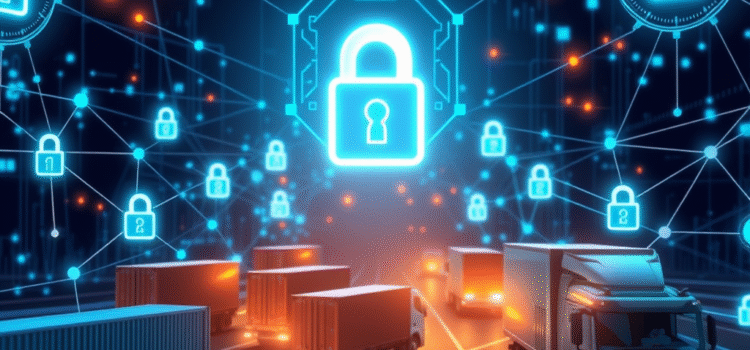
For decades, global supply chains have operated like black boxes — complex, opaque, and prone to disruption.
But 2025 marks a turning point.
With blockchain and artificial intelligence (AI) converging, we’re witnessing the birth of Supply Chain 2.0 — a system that’s not just transparent but predictive, adaptive, and intelligent.
It’s no longer about tracking where something is — it’s about knowing where it’s going before it even moves.
🔗 The Original Promise: Transparency
Blockchain first gained traction in logistics for one simple reason: trust.
In a global network of suppliers, shippers, and retailers, no single entity owns the truth. Blockchain changed that by creating a shared, immutable ledger that everyone could trust equally.
With blockchain, every step of a product’s journey — from raw material to delivery — can be verified in real time.
No more falsified records. No more missing shipments. Just transparent data visible to all stakeholders.
Today, this foundation has evolved beyond visibility into predictive intelligence, powered by AI.
🧠 Enter AI: Predictive Logistics and Smart Optimization
While blockchain provides the “what happened”, AI delivers the “what happens next.”
By analyzing on-chain data combined with IoT and logistics inputs, AI models can now:
- 📦 Predict supply chain bottlenecks before they occur
- 🚢 Optimize shipping routes dynamically based on real-time conditions
- 🏭 Forecast raw material demand with greater accuracy
- 🔍 Detect fraud or irregularities in procurement data
- 🌍 Suggest carbon-efficient logistics paths to meet ESG goals
This fusion of blockchain + AI turns traditional supply chains into self-learning networks — systems that continuously adapt to global conditions, not react after the fact.
🌐 Real-World Adoption Is Accelerating
Major industries are already deploying these systems at scale:
- Maersk & IBM’s TradeLens pioneered blockchain-based shipping data sharing (and paved the way for more open standards).
- Walmart uses blockchain to track food provenance, reducing recall times from weeks to seconds.
- De Beers leverages blockchain to verify ethically sourced diamonds.
- Vector Smart Chain (VSC) is exploring enterprise integrations for tokenized supply verification, real-time carbon tracking, and AI-assisted logistics automation on its interoperable Layer-1 framework.
What’s emerging is an interconnected logistics ecosystem where data flows seamlessly across blockchains, sensors, and AI systems — delivering efficiency and accountability across borders.
📊 Data Integrity: Blockchain’s Role in the AI Era
For AI to make reliable predictions, the data feeding it must be accurate and tamper-proof.
That’s where blockchain’s immutable nature becomes mission-critical.
Every shipment scan, invoice, and customs record is cryptographically secured — eliminating the data manipulation that plagues centralized ERP systems.
This guarantees data provenance — ensuring AI models are trained on verified, trustworthy information.
The result?
Smarter, faster, and more transparent decision-making from factory floor to final delivery.
🌱 Sustainability and ESG Impact
Supply Chain 2.0 isn’t just about logistics — it’s about accountability.
Enterprises are now required to track emissions, energy usage, and waste reduction efforts across their supply networks. Blockchain ensures this data is verifiable, while AI automates carbon accounting and ESG compliance.
Projects running on Vector Smart Chain (VSC) and similar ecosystems are integrating tokenized carbon credit systems, enabling companies to offset emissions in real time based on on-chain supply data.
This convergence turns sustainability from a marketing term into a measurable, auditable process.
🧩 The Future: Autonomous Supply Chains
Imagine a supply chain that:
- Monitors itself through IoT sensors
- Records transactions on a blockchain ledger
- Predicts disruptions using AI
- And executes adjustments automatically through smart contracts
That’s where we’re heading — fully autonomous logistics ecosystems, governed by code and powered by data integrity.
In this model, blockchain ensures truth, AI ensures efficiency, and smart contracts ensure action.
💡 WTF Does It All Mean?
The supply chain of the future won’t just be visible — it will be intelligent.
Blockchain provides the trust.
AI provides the foresight.
Together, they’re creating a world where products move smarter, faster, and cleaner — powered by verifiable truth and predictive intelligence.
From factories in Shenzhen to ports in Rotterdam, Supply Chain 2.0 isn’t coming — it’s already here.
And the networks built to support it — like Vector Smart Chain — are laying the foundation for global logistics systems that never sleep and never lie.
Key Takeaways
- 1Blockchain provides a transparent, immutable foundation for trust in global logistics networks.
- 2AI transforms supply chains by predicting disruptions and optimizing routes before issues occur.
- 3The fusion of blockchain and AI creates self-learning, autonomous supply chain networks.
- 4Data integrity on the blockchain is vital for training accurate and reliable AI models.
- 5Supply Chain 2.0 enables verifiable, real-time tracking for ESG and sustainability compliance.
Frequently Asked Questions
How do blockchain and AI work together in modern supply chains?
Why is blockchain essential for the accuracy of AI in logistics?
How does Supply Chain 2.0 help companies meet their ESG goals?
Related Glossary Terms
Supply Chain
In the context of blockchain, supply chain refers to the application of distributed ledger technology to record the movement of goods, components, and raw materials from their source to the end consumer. By providing an immutable, time-stamped history of every transition, blockchain addresses issues such as counterfeiting, inefficiencies in logistics, and lack of transparency. Every stakeholder in the supply chain can view the state of the product, ensuring authenticity and improving coordination across global logistics networks.
Provenance
In the context of blockchain and non-fungible tokens (NFTs), provenance refers to the immutable, chronologically ordered record of an asset's ownership history and transaction lifecycle. By leveraging the distributed ledger, provenance provides an authoritative, transparent, and tamper-proof trail that links a digital or tokenized physical asset back to its original creator. This cryptographic lineage ensures that the authenticity and full history of the asset can be verified by any participant, eliminating the necessity for third-party intermediaries to authenticate the asset’s origin or previous transfers.
Data Provenance
The ability to trace where data originated, how it changed, and which parties or processes handled it over time.
Emission
Emission refers to the scheduled release of new cryptocurrency tokens into the network, typically as a reward for participants who secure or maintain the blockchain. This usually occurs through consensus mechanisms like Proof of Work mining or Proof of Stake staking rewards. The emission rate defines how many tokens are introduced to the ecosystem over time and is governed by the protocol's underlying code to ensure predictable and transparent distribution.
Related Books
Deterministic Execution: The Future of Blockchain Infrastructure
How Vector Smart Chain Reimagines Blockchain Infrastructure for the Real World
Comprendre La Blockchain
Guide du débutant sur la technologie qui change le monde
Understanding Blockchain
A Beginner's Guide to the Technology That's Changing the World
Keep learning
Explore more in Blockchain