
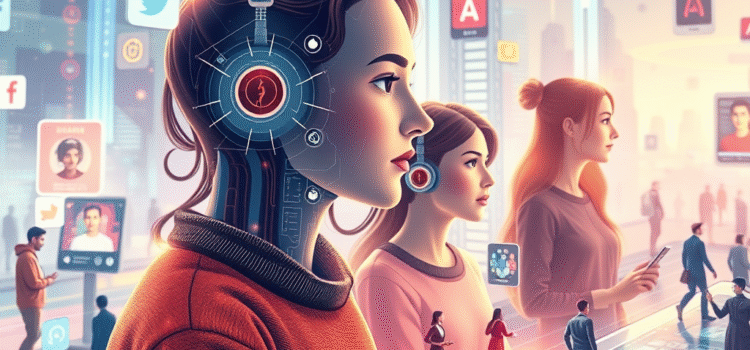
The year social platforms become economies—and users finally own everything they create.
For more than a decade, traditional social media has followed the same broken model:
big platforms capture the value, creators get pennies, users get nothing, and data gets harvested without consent.
But in 2026, the model flips.
The rise of SocialFi—social platforms powered by tokens, on-chain identity, decentralized storage, and AI-enabled engagement—creates a new internet where:
- users own their profiles
- creators own their audiences
- communities earn together
- value flows peer-to-peer
- AI agents participate on-chain
- platforms become tokenized economies
This is the year SocialFi stops being a niche experiment…
and becomes a legitimate replacement for traditional social networks.
Let’s break down why.
1. Ownership Becomes the Core Feature, Not a Buzzword
Traditional social media:
- owns your content
- controls your reach
- monetizes your data
- determines what goes viral
SocialFi flips the script.
In 2026, users and creators own:
- their posts
- their social graphs
- their audiences
- their monetization channels
- their digital identity
Creators take their followers with them anywhere across the network.
No more renting your audience from a platform.
2. Tokenized Social Graphs Turn Communities Into Economies
The breakthrough of SocialFi is that communities become value systems, not just chat rooms.
Communities earn through:
- social tokens
- membership NFTs
- reward systems
- tipping and microtransactions
- airdrops for participation
- on-chain achievements
- community-owned treasuries
The more active the community, the more valuable it becomes—and the value goes to the members, not the platform.
2026 marks the rise of:
- creator coins
- community-owned platforms
- token-gated access
- fan-investment ecosystems
Social networks finally reward the people who make them valuable.
3. AI Agents Become Community Members
In 2026, AI agents don’t just assist users—they participate directly in SocialFi ecosystems.
Agents can:
- run community moderation
- create content
- manage engagement
- perform research
- generate memes
- vote in DAOs (with delegated roles)
- earn rewards for tasks
AI becomes part of the social graph, not separate from it.
Platforms must now design:
- identity systems for agents
- reward systems for automated work
- governance rules for AI participants
This is one of the biggest new frontiers in SocialFi.
4. SocialFi Platforms Become Multi-Chain by Default
The days of a “single-chain social app” are over.
In 2026, SocialFi becomes chain-agnostic through:
- cross-chain social graphs
- universal profiles
- routing layers
- decentralized storage
- intent-based posting
Users don’t need to know what chain they’re on.
Everything is handled in the background.
5. Creators Get New Monetization Superpowers
SocialFi gives creators dozens of new income streams:
🔹 On-chain subscriptions
With instant, global settlement.
🔹 Tokenized fan clubs
Where members share upside.
🔹 NFT content passes
For exclusive archives or premium drops.
🔹 Revenue splits with communities
Social networks that pay contributors.
🔹 Creator tokens
That rise in value with engagement.
🔹 AI-generated content marketplaces
Where creators monetize outputs from their AI assistants.
Creators finally control the business—platforms become the infrastructure.
6. Decentralized Identity (DID) Fixes the “Platform Lock-In Problem”
One of Web2’s biggest problems:
when you switch social platforms, you lose everything.
In 2026, decentralized identity changes that.
Users carry:
- followers
- post history
- profile reputation
- achievements
- badges
- token balances
- community memberships
Across every app and chain.
It’s your social identity—not the platform’s.
7. VSC and Enterprise Blockchains Power the Next Generation of SocialFi
SocialFi needs:
- fast execution
- cheap transactions
- predictable fees
- decentralized storage
- AI integration
- identity systems
- sustainability
- enterprise-grade security
This is why chains like Vector Smart Chain (VSC) are ideal for powering social platforms like CryptoLounge or Social2Earn systems.
VSC offers:
- predictable $4 gas (perfect for high-activity systems)
- high-speed L1 performance
- EVM compatibility
- governance modules
- on-chain identity
- carbon tracking for ESG-grade networks
VSC becomes a natural home for SocialFi ecosystems that need scalability and trust.
8. Social2Earn Models Go Mainstream
2025 introduced Social2Earn.
2026 is the year it becomes the default model.
Users earn for:
- posting
- sharing
- engaging
- moderating
- completing quests
- driving community growth
- participating in live events
- running AI agents
The incentives align with platform health, not platform profits.
9. AI-Enhanced Social Feeds Replace Algorithmic Manipulation
Traditional social media algorithms maximize:
- outrage
- anger
- addiction
SocialFi introduces transparent AI feeds, where users control:
- ranking rules
- content filters
- agent-based personalization
- token-curated recommendations
404 toxic algorithms.
Hello self-curated experience.
10. Tokenized Communities Are the Future of the Internet
By 2026, we see:
- DAOs replacing group chats
- tokenized clubs replacing follower counts
- decentralized social networks challenging Meta and X
- creator economies becoming creator nations
- AI agents acting as social citizens
The internet becomes a network of micro-economies, not centralized feeds.
WTF Does It All Mean?
SocialFi isn’t replacing traditional social media overnight—
but it is replacing the business model of social media.
2026 marks the shift from:
- centralized → decentralized
- extractive → rewarding
- controlled → owned
- algorithmic → transparent
- passive users → active stakeholders
Tokenized communities are the new social networks.
Creators and users share the value, the governance, and the experience.
2026 isn’t the year SocialFi arrives.
It’s the year SocialFi becomes inevitable.
Key Takeaways
- 1SocialFi shifts ownership of content, identity, and audiences from platforms back to individual users and creators.
- 2Communities in 2026 function as tokenized economies where members earn value through active participation and governance.
- 3Decentralized identity ensures social graphs and user data are portable across different platforms and blockchains.
- 4AI agents act as active network participants, managing moderation and contributing to community-owned social ecosystems.
- 5Social2Earn models replace traditional advertising-driven algorithms with transparent, user-curated feeds that reward community engagement.
Frequently Asked Questions
What is SocialFi and how does it differ from traditional social media?
How do decentralized identities solve the platform lock-in problem?
What role do AI agents play within a SocialFi ecosystem?
How does the Social2Earn model function for platform users?
Related Glossary Terms
AI Agent
Software that uses artificial intelligence to perceive information, make decisions, and perform actions toward defined objectives.
Airdrop
An airdrop is a marketing or distribution strategy where a blockchain project distributes tokens or coins directly to the wallets of existing users, often for free. These distributions are usually carried out to incentivize protocol usage, reward early adopters, or achieve wider token distribution for decentralization purposes. Airdrops are recorded on the blockchain and often require specific criteria, such as holding a certain asset, participating in governance, or interacting with a protocol's smart contracts before a specific snapshot date.
Storage
In the context of the Ethereum Virtual Machine (EVM), storage refers to a persistent, key-value data store that is unique to each smart contract. Data written to storage is permanently saved on the blockchain, meaning it survives across multiple transactions and function calls. Because storage is the most expensive type of memory operation in terms of gas consumption, smart contract developers must be highly intentional about how they structure and access variables to minimize costs and optimize performance.
On-chain
On-chain refers to transactions or data that are recorded directly on the blockchain's main ledger. Once a transaction is processed on-chain, it is permanently etched into the record, making it immutable and verifiable by any participant. On-chain activities are broadcast to the entire network and require consensus from miners or validators to be confirmed. Because this involves global consensus, on-chain transactions are typically slower and more costly compared to off-chain methods but offer the highest level of security.
Keep learning
Explore more in Web3