
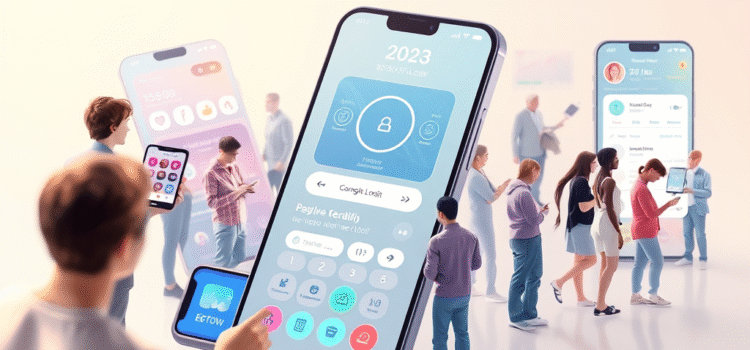
How 2025 transformed the crypto wallet from a clunky tool into a mobile-first, AI-powered, mainstream-ready super app.
For years, Web3 wallets were the single biggest barrier to adoption.
Confusing seed phrases.
No recovery options.
Slow mobile performance.
Clunky signing prompts.
Poor security.
Terrible onboarding.
But in 2025, everything changed.
This was the year Web3 finally became mobile-first, when wallets evolved into intuitive, secure, app-like experiences that worked for everyday users—not just crypto natives.
Let’s break down how 2025 redefined the Web3 wallet.
1. Account Abstraction Delivered Web2-Style Login (Finally)
The arrival of account abstraction (AA) was the biggest wallet revolution of 2025.
Mobile wallets now allow:
- FaceID / fingerprint login
- email or phone number onboarding
- no seed phrases
- social recovery
- secure device-bound authentication
For the first time ever, a new Web3 user can set up a wallet in seconds, on mobile, without touching private keys.
2025 killed the “crypto is too complicated” excuse.
2. Mobile Wallets Became Full Super Apps
In 2025, wallets evolved from “asset managers” into Web3 super apps.
The best mobile wallets integrated:
- swapping
- bridging
- staking
- SocialFi identity
- NFT galleries
- AI agents
- cross-chain messaging
- built-in DeFi dashboards
- push notifications
- DEX/RWA discovery pages
Everything happened in one place, and the mobile UX became the default.
3. Wallet Intent Engines Made Web3 Feel Like Magic
2025 introduced intent-based mobile interactions.
Users no longer needed to:
- choose networks
- select RPCs
- manually bridge
- adjust gas
- find liquidity
- understand slippage
Instead, they could simply tap:
- “Send cheapest route”
- “Swap best execution”
- “Buy this NFT”
- “Stake for rewards”
The wallet did the rest behind the scenes.
This was the moment Web3 started behaving like a smart assistant.
4. Multi-Chain Routing Became Invisible
Mobile wallets in 2025 stopped showing chain dropdowns entirely.
Users could:
- hold any token
- swap across any chain
- bridge automatically
- sign in to dApps without changing networks
Wallets became chain-agnostic, thanks to:
- LayerZero
- Axelar
- CCIP
- IBC expansions
- modular L1s
- cross-chain AA
“Which chain?” became a background detail—not a user decision.
5. Wallet Security Got a Massive Upgrade
Mobile wallets introduced:
- hardware-level secure enclaves
- biometric signing
- tap-to-revoke approvals
- AI phishing detection
- risk warnings
- real-time scam alerts
- multisig recovery backed by passkeys
- daily spending limits
- auto-revoke malicious contracts
AI-powered threat detection prevented millions in user losses.
2025 was the safest year yet for self-custody.
6. Mobile Wallets Became the Hub for On-Chain Identity
The rise of decentralized identity (DID) turned wallets into personal identity hubs, storing:
- verifiable credentials
- reputation scores
- badges
- memberships
- KYC attestations
- SocialFi identity
- game progress
- voting power
Your wallet became your digital passport across apps, DAOs, and blockchains.
7. NFT UX Finally Became Pleasant on Mobile
2025 mobile wallets dramatically improved NFT UX:
- faster media rendering
- cross-chain galleries
- collection stats
- in-wallet listing
- price histories
- rarity analysis
- AI tagging
- dynamic trait previews
It became easier to browse NFTs on your phone than on a desktop marketplace.
8. Mobile-First Web3 Gaming Exploded
2025 gaming wallets integrated:
- session keys
- gasless actions
- portable inventories
- instant NFT minting
- chain-agnostic assets
- AI companions
Gamers didn’t even know they were using Web3.
They just played.
9. Vector Smart Chain (VSC) Delivered One of the Cleanest Mobile Wallet Experiences
VSC’s predictable $4 flat-fee environment allowed mobile wallets to:
- show precise transaction costs
- offer gas sponsorship
- integrate staking and governance smoothly
- support AI-powered agents
- onboard users with zero friction
Paired with tools like BubbleSwap and CryptoLounge, VSC provided a Web3 mobile ecosystem that felt like Web2—but with ownership baked in.
10. Mobile Wallets Become AI-Powered by Default
2025 saw the rise of the AI wallet assistant.
Wallets gained the ability to:
- warn about risky transactions
- summarize smart contracts
- recommend safer options
- calculate optimized routes
- suggest strategies
- manage portfolio health
- present transaction clarity in simple English
- run autonomous tasks via agentic AI
Web3 wallets became intelligent.
WTF Does It All Mean?
2025 was the year Web3:
- got easier
- got safer
- went mobile
- went mainstream
- became invisible
- became intuitive
- became smarter
- became multi-chain
- embraced identity
- integrated AI
Wallets transformed from cryptic tools into consumer-grade super apps, enabling the next wave of Web3 adoption.
The mobile-first era is here—
and it’s the reason 2026 will be Web3’s first billion-user year.
Key Takeaways
- 1Account abstraction enabled seamless, password-free onboarding using biometrics instead of complex seed phrases.
- 2Wallets transformed into multifunctional super apps that consolidate DeFi, NFTs, and identity tools in one interface.
- 3Intent-based technology automated technical processes like bridging and gas selection, creating a simpler user experience.
- 4AI-powered security features, such as real-time threat detection, made self-custody safer for average consumers.
- 5Cross-chain technology made blockchain selection invisible, allowing users to interact with assets regardless of network.
Frequently Asked Questions
What is account abstraction and how did it change mobile wallets in 2025?
How did intent engines improve the user experience for mobile crypto wallets?
What role did artificial intelligence play in wallet security during 2025?
Why are modern Web3 wallets considered super apps?
Related Glossary Terms
Mobile Wallet
A mobile wallet is a cryptocurrency wallet application designed specifically for use on smartphones and tablets. These wallets leverage the portability of mobile devices to allow users to manage digital assets on the go, often incorporating features like QR code scanning for fast payments and push notifications for transaction updates. While mobile wallets are technically a subset of hot wallets, they provide a distinct user experience focused on simplicity, retail transactions, and convenience in a mobile-first digital economy.
Account Abstraction
A blockchain account design that uses programmable logic for authentication, recovery, fee payment, and transaction execution.
Session Key
A temporary or scoped key granted limited permissions so an application can perform approved actions without repeated full-wallet signatures.
Seed Phrase
A seed phrase, or mnemonic phrase, is a series of 12 to 24 human-readable words that act as the master key to a cryptocurrency wallet. It is generated using the BIP-39 standard and allows a user to recover their private keys and assets across different wallet applications. Because the seed phrase represents the absolute control over the associated funds, it is considered the most critical piece of security information for any self-custody user.
Keep learning
Explore more in Web3