
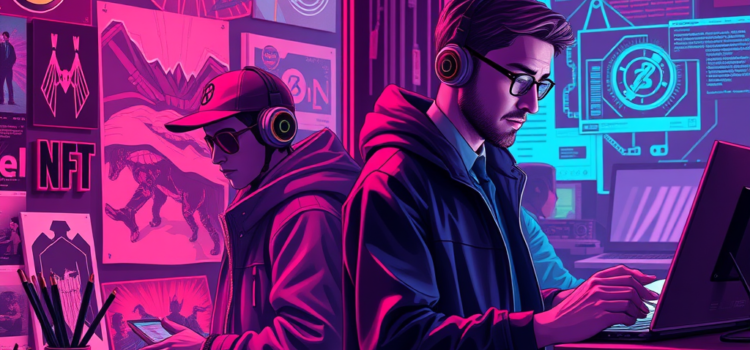
The Web3 revolution is transforming content creation by giving artists and writers unprecedented control over their work. Blockchain technology underpins this shift, enabling decentralized ownership, fair monetization, and enhanced creative freedom. In this article, we explore how Web3 is empowering creators and reshaping the landscape of art and writing.
1. The Web3 Difference for Content Creators
Web3 leverages blockchain to create decentralized platforms, enabling creators to bypass traditional intermediaries and directly engage with their audiences.
Key Features:
- Ownership: Blockchain ensures that creators retain full ownership of their work.
- Transparency: All transactions and engagements are verifiable on the blockchain.
- Fair Revenue Sharing: Eliminates the need for intermediaries, allowing creators to earn a larger share of their revenue.
2. Opportunities for Artists in Web3
2.1. Tokenized Art and NFTs
- Artists can tokenize their creations as non-fungible tokens (NFTs), turning digital art into verifiable, unique assets.
- Example: Digital artists selling limited-edition pieces on platforms like OpenSea or Rarible.
2.2. Royalties Through Smart Contracts
- Smart contracts automatically enforce royalty payments each time an NFT is resold.
- Impact: Artists continue earning from secondary sales, ensuring long-term revenue.
2.3. Decentralized Marketplaces
- Platforms like Foundation and SuperRare provide direct access to collectors.
- Benefit: Increased exposure and control over pricing.
3. Opportunities for Writers in Web3
3.1. Tokenized Content
- Writers can tokenize their work, allowing readers to own and trade unique copies.
- Example: Selling tokenized editions of e-books or serialized stories.
3.2. Decentralized Publishing
- Platforms like Mirror allow writers to publish without censorship, retaining full ownership of their content.
- Benefit: Freedom to create and monetize without platform restrictions.
3.3. Community-Driven Funding
- Writers can crowdfund projects using tokens or DAOs, engaging their audience in the creative process.
- Example: Fans voting on story directions or contributing to publishing costs.
4. Key Web3 Platforms for Creators
4.1. OpenSea
- A leading NFT marketplace for artists to sell digital creations.
4.2. Mirror
- A decentralized publishing platform empowering writers with ownership and monetization tools.
4.3. Foundation
- An NFT marketplace focused on empowering digital creators.
4.4. Patreon Alternatives
- Decentralized platforms like Superfluid and Unlock Protocol enable ongoing creator support through subscriptions.
5. Benefits of Web3 for Creators
5.1. Direct Engagement
- Creators can connect with their audiences without intermediaries.
- Impact: Stronger community relationships and tailored content.
5.2. Enhanced Monetization
- Web3 platforms offer diverse revenue streams, including NFT sales, tokenized subscriptions, and royalties.
- Example: Artists earning passive income from resales of their tokenized work.
5.3. Creative Freedom
- Decentralized platforms reduce the risk of censorship and content removal.
5.4. Global Reach
- Blockchain’s borderless nature allows creators to engage with a worldwide audience.
6. Challenges and Considerations
6.1. Technical Complexity
- Onboarding creators unfamiliar with blockchain technology can be challenging.
- Solution: User-friendly platforms and educational resources.
6.2. Market Saturation
- The growing number of creators may lead to a competitive environment.
- Solution: Building a niche and leveraging community support.
6.3. Environmental Concerns
- Energy-intensive blockchains raise sustainability questions.
- Solution: Adoption of eco-friendly platforms like Polygon and Solana.
7. The Future of Content Creation in Web3
7.1. Collaborative Projects
- DAOs enabling co-creation between artists, writers, and their communities.
7.2. Enhanced Tools
- AI-powered tools for generating and promoting content on Web3 platforms.
7.3. Gamification
- Incorporating gamified experiences to engage audiences, such as unlocking exclusive content through token ownership.
7.4. Integration with the Metaverse
- Showcasing art and stories in immersive virtual environments.
WTF Does It All Mean?
Web3 is ushering in a new era of content creation, where artists and writers can reclaim control, earn fair rewards, and engage directly with their audiences. While challenges remain, the opportunities for innovation, ownership, and collaboration make Web3 an exciting frontier for creators. As the decentralized ecosystem grows, it will continue to redefine the creative economy.
For more insights into Web3 and blockchain innovations, visit jasonansell.ca.
Key Takeaways
- 1Web3 enables creators to bypass traditional intermediaries, fostering direct relationships with their global audiences.
- 2Blockchain technology provides transparent ownership and fair revenue sharing for artists and writers.
- 3Smart contracts allow artists to earn recurring royalties from secondary sales of their digital work.
- 4Decentralized platforms offer increased creative freedom by reducing the risks of censorship and platform-imposed restrictions.
- 5Creators face challenges like technical complexity and market saturation but benefit from innovative community-funding models.
Frequently Asked Questions
How do smart contracts help artists earn money in Web3?
How does decentralized publishing change the way writers work?
What is the role of tokenization in Web3 content creation?
Can creators crowdfund projects in Web3?
Related Glossary Terms
NFT Marketplace
An NFT marketplace is a decentralized or centralized platform that serves as a hub for users to buy, sell, trade, and discover digital assets. These platforms provide the necessary user interface to interact with blockchain smart contracts, allowing for seamless transactions, bidding, and auctioning. Marketplaces typically handle the technical complexities of connecting wallets, displaying metadata, and executing smart contract functions, effectively acting as the intermediary layer between the blockchain and the everyday consumer.
DAO
A Decentralized Autonomous Organization (DAO) is a member-owned, blockchain-based entity characterized by a lack of centralized authority. Operations are governed by smart contracts that automatically execute predefined rules based on transparent, on-chain voting. DAOs coordinate resources and decision-making among geographically dispersed participants, eliminating the need for traditional corporate hierarchies. By leveraging cryptographic transparency, DAOs ensure that every transaction and governance action is verifiable on the public ledger, promoting a high degree of trustless collaboration within decentralized ecosystems and digital protocols.
Non-Fungible Token
A Non-Fungible Token (NFT) is a cryptographic asset on a blockchain with unique identification codes and metadata that distinguish it from all other tokens. Unlike fungible assets like Bitcoin or fiat currency, which are interchangeable and identical in value, an NFT is unique and cannot be replaced with an identical item. This property of non-fungibility makes NFTs ideal for representing ownership of unique digital items, such as art, music, gaming assets, or real-world property deeds, within a verifiable, decentralized system.
Decentralized Autonomous Organization (DAO)
An organization governed by smart contracts and on-chain voting, without traditional management structures. DAO members hold governance tokens that give them voting power over proposals. All rules, funds, and decisions are recorded transparently on the blockchain.
Non-Fungible Token (NFT)
A unique digital token that represents ownership of a specific asset. Unlike fungible tokens (where each unit is identical), NFTs are distinct and non-interchangeable. NFTs are commonly used for digital art, collectibles, game items, and representations of real-world assets.
Keep learning
Explore more in Web3