
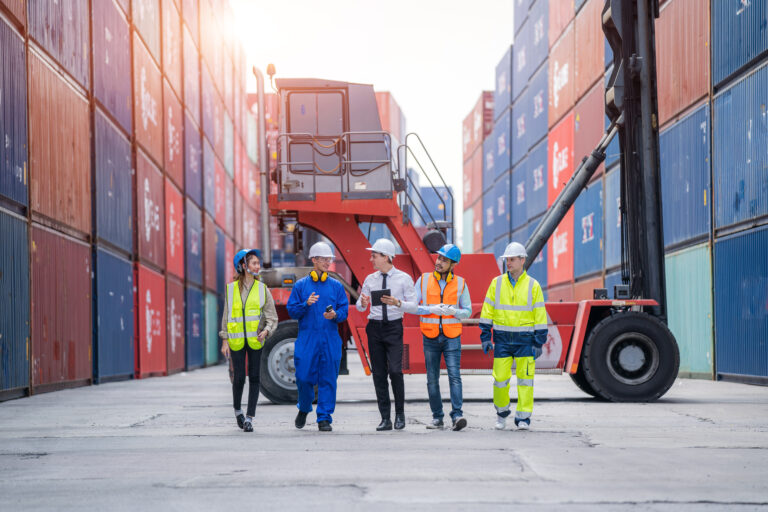
Blockchain technology is often associated with cryptocurrencies like Bitcoin, but its applications extend far beyond digital currencies. One of the most compelling real-life examples of blockchain technology is its use in supply chain management. This article will explore how blockchain is revolutionizing supply chains by providing transparency, efficiency, and security.
Blockchain in Supply Chain Management
Supply chain management involves the movement of goods from suppliers to manufacturers to distributors to retailers, and finally, to consumers. Traditional supply chains can be complex, involving multiple parties and numerous transactions, which often lead to inefficiencies, fraud, and a lack of transparency. Blockchain technology addresses these issues by creating a transparent, immutable, and decentralized record of all transactions within the supply chain.
How Blockchain Works in the Supply Chain
- Transparency and Traceability:
- Every transaction or movement of goods is recorded on a blockchain. This creates a transparent and immutable ledger that all participants can view.
- For example, when a product is manufactured, its details (like the source of raw materials, manufacturing date, and batch number) are recorded on the blockchain. As the product moves through the supply chain, each transaction is added to the blockchain, creating a complete history of the product.
- Enhanced Security:
- Blockchain’s decentralized nature ensures that no single entity controls the data. This reduces the risk of fraud and tampering.
- Each block of transactions is cryptographically linked to the previous block, making it nearly impossible to alter any information without being detected.
- Efficiency and Cost Reduction:
- Blockchain can automate various processes through smart contracts. These are self-executing contracts with the terms directly written into code, which automatically execute and enforce agreements when certain conditions are met.
- By reducing the need for intermediaries and manual paperwork, blockchain can streamline operations and reduce costs.
Real-Life Example: Walmart and IBM’s Food Trust Blockchain
One of the most notable real-life examples of blockchain in supply chain management is Walmart’s partnership with IBM to create the Food Trust blockchain.
- The Problem:
- Food safety is a major concern for retailers like Walmart. Traditional methods of tracking food through the supply chain can be slow and prone to errors, making it difficult to quickly trace the source of contamination during a foodborne illness outbreak.
- The Solution:
- Walmart implemented IBM’s Food Trust blockchain to enhance the traceability of its food products. The blockchain records every step of the food’s journey from farm to table, including details about the farm, processing, packaging, and distribution.
- The Benefits:
- Improved Traceability: In the event of a contamination issue, Walmart can trace the affected food back to its source in seconds, rather than days or weeks. This rapid response helps prevent the spread of illness and reduces the scope of product recalls.
- Enhanced Transparency: Consumers can access detailed information about the origin and journey of their food, increasing trust in the products they purchase.
- Reduced Waste: By having precise tracking data, Walmart can better manage inventory and reduce waste, ensuring fresher products for consumers.
Other Examples of Blockchain in Supply Chains
- De Beers’ Diamond Tracking:
- The diamond company De Beers uses blockchain to track diamonds from the mine to the retailer. This ensures that the diamonds are conflict-free and provides transparency to consumers about the origin and journey of their purchase.
- Maersk and IBM’s TradeLens:
- Maersk, a global shipping giant, partnered with IBM to create TradeLens, a blockchain-based platform for tracking shipments. This platform improves the efficiency and transparency of global trade by providing real-time access to shipping data for all participants in the supply chain.
- Provenance:
- Provenance, a UK-based company, uses blockchain to track the origin and journey of food and other products. This helps consumers make informed decisions and supports brands in ensuring the authenticity and ethical sourcing of their products.
Conclusion
Blockchain technology offers significant advantages in supply chain management by enhancing transparency, security, and efficiency. Real-life implementations, such as Walmart’s Food Trust blockchain, demonstrate the transformative potential of blockchain across various industries. As blockchain technology continues to evolve, its applications are likely to expand, further revolutionizing how we track and manage the flow of goods around the world.
Key Takeaways
- 1Blockchain creates an immutable record that enhances transparency and traceability across complex supply chains.
- 2Decentralized ledger technology reduces the risk of fraud by making data tampering nearly impossible.
- 3Smart contracts automate supply chain operations, leading to improved efficiency and lower administrative costs.
- 4Real-world implementations like Walmart Food Trust demonstrate how blockchain effectively manages food safety and recalls.
Frequently Asked Questions
How does blockchain improve supply chain transparency?
What is the role of smart contracts in supply chain management?
Why did Walmart implement the Food Trust blockchain?
Can blockchain help verify ethical sourcing for products?
Related Glossary Terms
Traceability
Traceability on a blockchain is the capability to track the complete history, location, and condition of an item from its origin through every step of its lifecycle. It relies on the immutability of the distributed ledger, which ensures that record-keeping cannot be falsified or deleted after entry. This creates a robust audit trail, critical for industries where safety, authenticity, and regulatory adherence are paramount, enabling stakeholders to respond quickly to recalls and supply chain bottlenecks.
Supply Chain
In the context of blockchain, supply chain refers to the application of distributed ledger technology to record the movement of goods, components, and raw materials from their source to the end consumer. By providing an immutable, time-stamped history of every transition, blockchain addresses issues such as counterfeiting, inefficiencies in logistics, and lack of transparency. Every stakeholder in the supply chain can view the state of the product, ensuring authenticity and improving coordination across global logistics networks.
Provenance
In the context of blockchain and non-fungible tokens (NFTs), provenance refers to the immutable, chronologically ordered record of an asset's ownership history and transaction lifecycle. By leveraging the distributed ledger, provenance provides an authoritative, transparent, and tamper-proof trail that links a digital or tokenized physical asset back to its original creator. This cryptographic lineage ensures that the authenticity and full history of the asset can be verified by any participant, eliminating the necessity for third-party intermediaries to authenticate the asset’s origin or previous transfers.
Blockchain
A distributed, decentralized digital ledger that records transactions across many computers in such a way that the records cannot be altered retroactively without the consensus of the network. Each block contains a cryptographic hash of the previous block, creating an immutable chain.
Consensus Mechanism
The algorithmic process by which a distributed blockchain network agrees on a single version of the ledger. Consensus mechanisms solve the problems of agreement (all honest nodes agree) and Sybil resistance (preventing fake identity takeovers).
Related Books
Deterministic Execution: The Future of Blockchain Infrastructure
How Vector Smart Chain Reimagines Blockchain Infrastructure for the Real World
Comprendre La Blockchain
Guide du débutant sur la technologie qui change le monde
Understanding Blockchain
A Beginner's Guide to the Technology That's Changing the World
Keep learning
Explore more in Blockchain