
<p>A service goes down. The status page says the team is investigating. Before it can say what happened, someone calls it a cyberattack, someone else blames artificial intelligence, and your phone starts buzzing with messages that all sound certain. The disruption is real. The explanation may not be.</p>
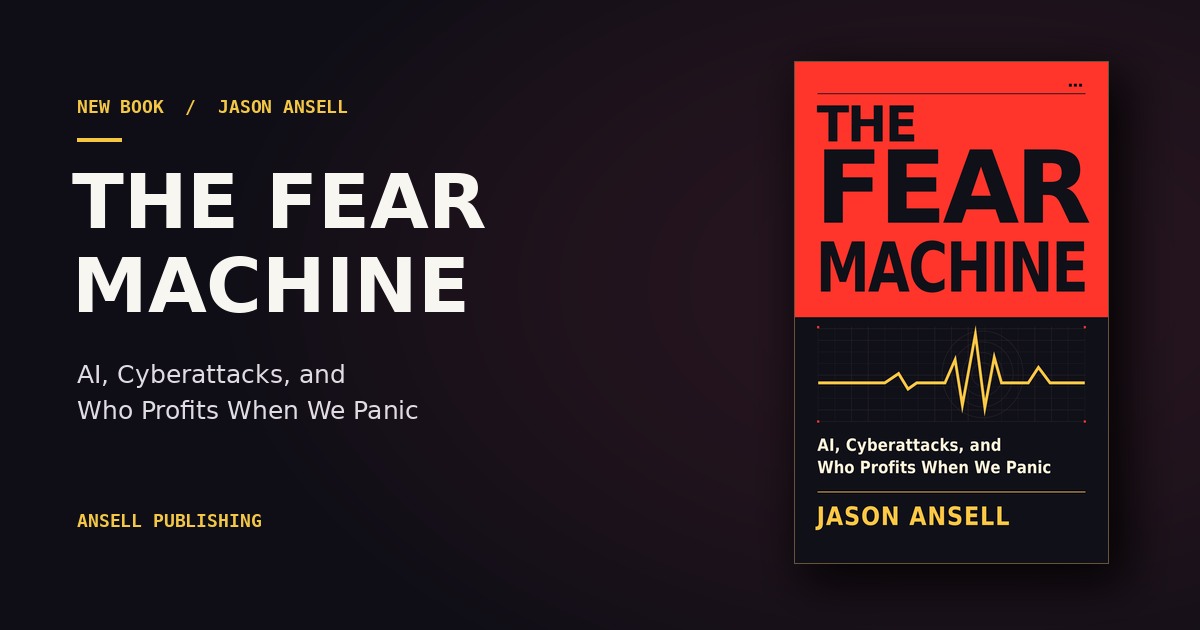
<p>That gap is why I wrote <em>The Fear Machine: AI, Cyberattacks, and Who Profits When We Panic</em>, my new book from Ansell Publishing. I wanted to look at what happens when we have to make decisions before we have the full story, and at what some people stand to gain when the most alarming version becomes the one we remember.</p>
<h2>An outage isn’t an explanation</h2>
<p>A software failure and a deliberate attack can look identical to the person staring at an error message. That doesn’t make them equally likely, or make the harm any less real. It means we should be able to say two things at once: people are being affected, and we don’t yet know why.</p>
<p>I wanted to give readers a way to separate the evidence of disruption from evidence about its cause. Was something unavailable? Was there unauthorized access? Is there evidence that information was taken? Those are different questions. Answering the first doesn’t automatically answer the others.</p>
<h2>“AI was involved” is the start of the question</h2>
<p>The label “AI” can describe very different roles. A system might flag a pattern, generate a convincing message, or make a recommendation that a person can accept or reject. Each use raises different questions about what happened and who was responsible. The same distinction matters in reverse: familiar automation doesn’t become intelligent because someone markets it that way.</p>
<p>Impersonation is where this becomes personal. If a voice sounds familiar and asks you to act quickly, the first question isn’t whether you can spot a synthetic voice. It’s whether you can verify the request independently. Calling back on a number you already know can be more useful than trying to judge whether the voice sounds real.</p>
<h2>What fear can sell</h2>
<p>Fear can sell a headline, a service, or a promise that someone has everything under control. That doesn’t mean every warning is manipulative or every company selling protection is acting in bad faith. It does mean that the case for a purchase, a policy, or a rush decision should be able to stand on something stronger than urgency alone.</p>
<p>I wrote this book for people who take digital threats seriously and are tired of being told they have to choose between panic and dismissal. The habit I hope readers take from it is simple: ask what is known, what is still being inferred, and what you can do now that would still make sense if the first explanation turns out to be wrong.</p>
<h2>Read The Fear Machine</h2>
<p><em>The Fear Machine</em> has been released on Kindle and in paperback. Visit <a href="https://ansellpublishing.com/books/the-fear-machine">the book page at Ansell Publishing</a> for the full description and current retailer links.</p>
Key Takeaways
- 1Distinguish between visible system disruptions and the unverified causes behind them.
- 2The label AI describes diverse technologies that require specific analysis rather than blanket assumptions.
- 3Verify suspicious requests via independent channels rather than relying on biometric or audio judgment.
- 4Urgency is often used to drive panic; always prioritize known evidence over speculative explanations.
Frequently Asked Questions
How can you distinguish between a software failure and a deliberate cyberattack?
While an outage and a cyberattack may appear identical to a user, they are distinct events with different causes. Evidence of disruption does not confirm the cause, so users should wait for verified reports regarding unauthorized access or data theft before drawing conclusions.
Why is the term AI often misleading when used to explain digital disruptions?
AI is a broad label covering everything from automated pattern flagging to generative content, each posing different risks and accountability issues. Using the term without specific context often obscures the actual mechanics of a system failure or security event.
What is the best way to verify a suspicious request involving synthetic voice technology?
Instead of attempting to determine if a voice sounds authentic, you should verify the request through an independent channel. Calling back the person or entity on a known, trusted phone number is more reliable than analyzing the audio for potential manipulation.
Keep learning
Explore more in this topic