
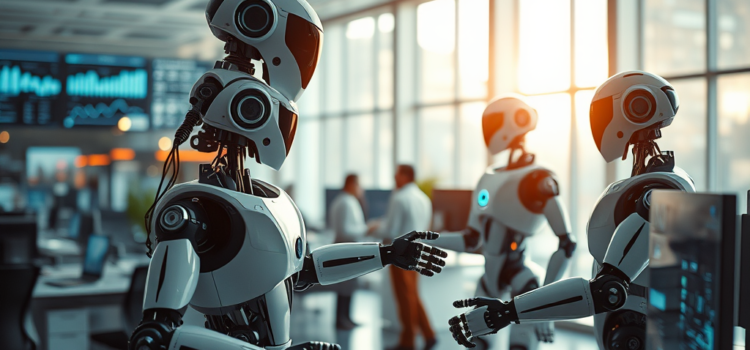
Artificial Intelligence (AI) is fundamentally transforming the way we work, from automating repetitive tasks to creating smarter decision-making processes. As industries continue to adopt AI-powered automation, the future of work is set to evolve dramatically by 2025. This article will explore how AI is reshaping various sectors, automating essential tasks, and impacting the workforce, with a focus on what businesses and professionals can expect in the near future.
1. The Rise of AI in the Workplace
AI’s capabilities are expanding rapidly, enabling machines to handle tasks that were once exclusive to human workers. AI-powered automation is enhancing productivity, reducing operational costs, and minimizing human error across a variety of industries. By 2025, we can expect:
- Higher Efficiency: AI can process large amounts of data faster and more accurately than humans, making it invaluable for tasks like data analysis, customer service, and supply chain management.
- Enhanced Decision-Making: AI-powered analytics provide insights that help businesses make data-driven decisions, improving outcomes in areas like marketing, finance, and strategic planning.
- Scalability: With AI, companies can scale processes more efficiently, whether it’s automating a small administrative task or handling large-scale operations.
2. Industries Transformed by AI-Powered Automation
2.1. Healthcare
AI has revolutionized healthcare, providing tools that improve patient outcomes, streamline administrative tasks, and reduce costs.
- Medical Diagnostics: AI-driven tools can analyze medical imaging and detect diseases such as cancer, often more accurately than human specialists. By 2025, diagnostics powered by AI will play a central role in preventive healthcare.
- Patient Monitoring: Wearable devices equipped with AI algorithms enable real-time monitoring, helping healthcare providers manage chronic diseases and predict health risks.
- Administrative Efficiency: AI automates billing, patient scheduling, and record management, freeing up healthcare professionals to focus on patient care.
2.2. Finance and Banking
The finance sector has been an early adopter of AI, leveraging it to enhance security, optimize trading strategies, and improve customer service.
- Fraud Detection: AI algorithms analyze transaction patterns to detect and prevent fraudulent activities in real time. This makes banking safer for customers and protects institutions from significant financial losses.
- Automated Trading: AI-driven trading bots can execute trades at optimal times, reacting to market trends faster than human traders, leading to higher returns on investments.
- Customer Service Automation: Chatbots and virtual assistants help customers with queries, transactions, and account management, creating a seamless experience and reducing customer service costs.
2.3. Manufacturing
AI is central to the development of Industry 4.0, where factories and supply chains are automated for maximum efficiency.
- Predictive Maintenance: AI-powered systems can predict equipment failures before they happen, reducing downtime and maintenance costs.
- Robotic Process Automation (RPA): Robots equipped with AI handle repetitive manufacturing tasks, improving efficiency and product quality. By 2025, AI-driven robotics will be standard in many manufacturing plants.
- Supply Chain Optimization: AI analyzes supply chain data to optimize production schedules, manage inventory levels, and forecast demand more accurately.
2.4. Retail
The retail sector is increasingly using AI to improve customer experience, streamline operations, and personalize marketing efforts.
- Personalized Recommendations: AI algorithms analyze shopping behaviors to provide personalized product recommendations, increasing sales and enhancing customer satisfaction.
- Inventory Management: AI-powered systems predict stock needs, preventing overstocking or stockouts, which helps in optimizing costs.
- Customer Service: Virtual assistants and chatbots assist customers in finding products, answering questions, and making purchases, providing a 24/7 customer service solution.
3. The Future of the Workforce: Jobs, Skills, and Opportunities
While AI-powered automation brings efficiency, it also reshapes the workforce, creating new job roles while making others obsolete. Here’s what professionals can expect by 2025:
3.1. Emergence of New Job Roles
AI is expected to create jobs in areas like AI development, data science, and machine learning engineering. As more companies integrate AI, demand for these roles will continue to rise.
- AI and Machine Learning Specialists: As AI becomes embedded in business operations, the need for specialists who can develop and manage AI systems will grow.
- Data Analysts and Scientists: Data plays a central role in AI, and companies will require experts who can interpret and leverage data insights.
- Ethics and Compliance Officers: With AI’s growing influence, there’s an increased focus on ethical considerations, privacy, and regulatory compliance.
3.2. The Shift Toward Skill-Based Employment
As automation takes over routine tasks, there will be a shift toward skill-based employment. Skills like critical thinking, creativity, and emotional intelligence will become increasingly valuable.
- Upskilling and Reskilling: Companies are investing in training programs to help employees adapt to new AI technologies. Workers are encouraged to develop digital skills and proficiency in areas like data analysis, AI, and machine learning.
- Interpersonal Skills: Skills that can’t be easily automated, such as emotional intelligence, problem-solving, and leadership, will be in high demand as AI takes on technical tasks.
3.3. Hybrid Work Models and Remote Collaboration
AI-powered tools are enabling remote work and hybrid models, providing flexibility for employees and companies alike. Collaboration tools with AI capabilities enhance productivity and enable real-time communication, making remote work more efficient.
- Enhanced Communication: AI-driven platforms like Slack, Microsoft Teams, and Zoom are incorporating AI features for better communication, such as automatic transcriptions, sentiment analysis, and smart scheduling.
- Productivity Tracking: AI tools help employers monitor productivity, optimize workflows, and manage remote teams effectively, leading to a shift in how work performance is assessed and managed.
4. The Impact of AI on Business Strategy and Decision-Making
4.1. Data-Driven Decision-Making
AI can process vast amounts of data, providing insights that enable informed business decisions. Companies are increasingly relying on AI analytics to forecast trends, optimize operations, and make strategic investments.
- Predictive Analytics: By analyzing historical data, AI algorithms can predict market trends, customer behavior, and potential risks, giving companies a competitive edge.
- Strategic Planning: AI tools assist executives in evaluating different strategies based on real-time data, ensuring decisions align with company goals and market conditions.
4.2. AI as a Tool for Competitive Advantage
Companies that integrate AI and automation into their operations gain a competitive advantage through improved efficiency, reduced costs, and enhanced customer experiences. By 2025, early adopters of AI will have a significant lead over competitors in terms of innovation and market share.
- Personalized Marketing: AI enables hyper-personalized marketing, analyzing customer data to create tailored advertising that increases engagement and conversions.
- Dynamic Pricing: Retailers and e-commerce platforms use AI to adjust prices in real time based on demand, competitor prices, and customer behavior, optimizing revenue.
WTF Does It All Mean?
AI-powered automation is reshaping the workforce, driving efficiency across industries, and creating a future where machines handle repetitive tasks, allowing humans to focus on creativity, problem-solving, and strategic thinking. While this transformation may eliminate some jobs, it also creates new opportunities for skill development, flexible work models, and innovation. As businesses adopt AI to streamline processes, increase customer engagement, and drive strategic decisions, they gain a competitive edge that will define their success in the years to come.
By 2025, AI will be an integral part of everyday work life, empowering professionals with tools that enhance productivity and enable smarter decision-making. For companies and individuals alike, embracing AI-driven change is key to staying relevant and thriving in an automated world.
For more insights on AI, technology, and the future of work, visit jasonansell.ca.
Key Takeaways
- 1AI-powered automation is significantly increasing operational efficiency and decision-making capabilities across major global industries.
- 2Key sectors like healthcare, finance, and manufacturing are utilizing AI to reduce costs and improve service outcomes.
- 3The evolution of the workplace is creating demand for technical AI roles and regulatory compliance expertise.
- 4Workers must prioritize developing human-centric skills and digital proficiency to remain competitive in an automated landscape.
Frequently Asked Questions
How does AI-powered automation improve workplace efficiency?
Which industries are seeing the most impact from AI automation?
What types of new job roles will emerge due to AI?
How should professionals prepare for an AI-integrated workforce?
Related Books
Claude AI for Beginners Bible: [5 in 1] The Ultimate Guide to Automate Your Work, Save Hours Every Week, and Use AI for Real-World Results
The Adventures of The Crypto Kid & Lucy: Journey to the Moon
A Fun Educational Adventure About Technology, Problem Solving, and Imagination
The Adventures of The Crypto Kid & Lucy: The Metaverse Mystery
A Fun Educational Adventure Into the Digital World
Related Learning Paths
Keep learning
Explore more in Technology