
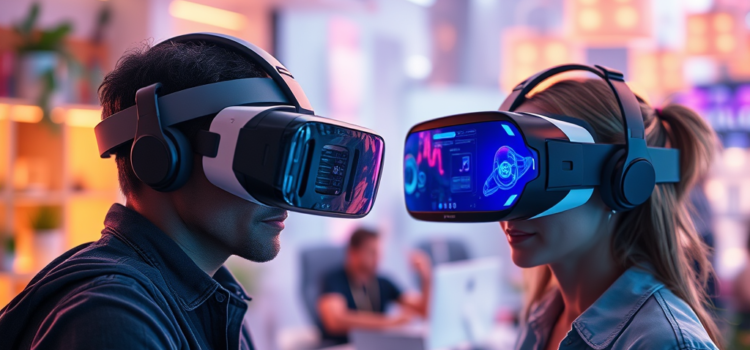
The augmented reality (AR) and virtual reality (VR) war is heating up in 2025, with Apple Vision Pro, Meta Quest, and other competitors battling for dominance in mixed reality.
With Apple’s premium approach, Meta’s mainstream push, and emerging startups innovating in spatial computing, the AR/VR landscape is evolving rapidly. But which headset is leading the race, and how will it impact the future of work, entertainment, and social interaction?
Let’s break down the top AR/VR headsets, their features, and the future of immersive technology.
1. The Major Players in AR/VR in 2025
Device
Apple Vision Pro
Meta Quest 3
HTC Vive XR Elite
Sony PlayStation VR2
Platform
VisionOS (Apple)
Meta Reality (Facebook)
SteamVR / Standalone
PlayStation 5
Technology
Mixed Reality (MR)
Mixed Reality (MR)
VR + XR
VR
Display
Micro-OLED 4K per eye
LCD QHD per eye
4K LCD
OLED HDR
Tracking
Eye + Hand Tracking
Inside-out tracking
Hand Tracking
PSVR2 Sense Controllers
Processing
M2 + R1 Chip
Snapdragon XR2 Gen 2
Snapdragon XR2
PlayStation 5
Price
$3,499+
$499
$1,099
$549
Best For
Productivity, Spatial Computing
Gaming, Social VR
VR Enthusiasts
PlayStation Gaming
2. Apple Vision Pro: The High-End Mixed Reality Experience
✅ Strengths:
✔️ Best-in-class display with ultra-high resolution.
✔️ Spatial computing focus for work & entertainment.
✔️ Seamless integration with Apple ecosystem (Mac, iPad, iPhone).
✔️ Hand & eye tracking for a controller-free experience.
❌ Weaknesses:
- Expensive ($3,499 makes it a niche product).
- Limited gaming content compared to Meta Quest.
- Battery life concerns (2 hours on external battery pack).
Best for: Professionals, designers, and enterprise users looking for AR/VR productivity tools.
3. Meta Quest 3: The Affordable Mixed Reality Leader
✅ Strengths:
✔️ Best price-to-performance ratio ($499).
✔️ Large VR gaming library (Meta’s ecosystem).
✔️ Standalone device—no PC required.
✔️ Supports both VR & AR through passthrough mode.
❌ Weaknesses:
- Lower-resolution display than Apple Vision Pro.
- Less premium build quality.
- Meta’s ad-driven ecosystem raises privacy concerns.
Best for: Gamers, casual users, and social VR fans.
4. HTC Vive XR Elite: The Enthusiast’s Choice
✅ Strengths:
✔️ Great mix of VR & XR features.
✔️ Modular design for different use cases.
✔️ Works with PC VR & standalone mode.
❌ Weaknesses:
- Expensive ($1,099).
- Smaller content library than Meta Quest.
Best for: Tech enthusiasts and professionals needing an all-in-one VR/XR solution.
5. Sony PlayStation VR2: The Best Console VR Headset
✅ Strengths:
✔️ Designed for gaming with PlayStation 5.
✔️ OLED HDR display with high resolution.
✔️ Immersive haptic feedback & adaptive triggers.
❌ Weaknesses:
- Requires PlayStation 5 (not standalone).
- Limited non-gaming applications.
Best for: Console gamers who want a high-quality VR experience.
6. The Future of AR/VR: What’s Next?
🔹 Spatial Computing Revolution – AR glasses are replacing traditional screens.
🔹 AI-Powered Virtual Assistants – Apple and Meta integrating AI into VR environments.
🔹 Decentralized Metaverse Growth – Blockchain-powered metaverse ecosystems are emerging.
🔹 More Affordable AR Devices – Competition will drive prices down for mainstream adoption.
WTF Does It All Mean?
The battle for AR/VR dominance is no longer just about gaming—it’s about how we interact with the digital world.
✅ Apple Vision Pro leads in premium quality & productivity.
✅ Meta Quest 3 dominates affordable mixed reality & social VR.
✅ HTC & Sony offer strong alternatives for different use cases.
As AR/VR adoption grows, the question isn’t if these devices will replace screens—it’s when.
🚀 Which headset are you most excited about?
For more tech, Web3, and innovation insights, visit jasonansell.ca.
Key Takeaways
- 1Apple Vision Pro leads in premium display technology and spatial computing for professional use cases.
- 2Meta Quest 3 remains the market leader for affordable, standalone mixed reality and gaming experiences.
- 3Hardware innovation is shifting from pure gaming focus toward broader productivity and AI-integrated applications.
- 4Market competition between major tech companies is expected to drive prices down and increase mainstream adoption.
Frequently Asked Questions
What is the primary difference between Apple Vision Pro and Meta Quest 3?
Do I need a computer to use a standalone VR headset?
What are the key benefits of spatial computing in AR/VR?
Keep learning
Explore more in Technology