
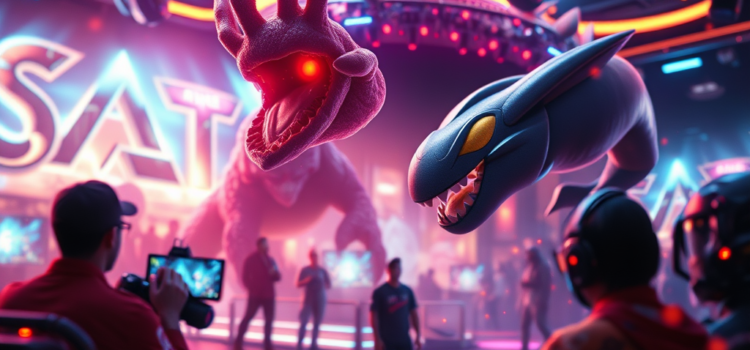
The gaming industry has always been a pioneer of innovation, but the integration of blockchain technology is taking it to a whole new level. Web3 gaming, powered by play-to-earn (P2E) models, is transforming entertainment by enabling players to own in-game assets, earn real-world value, and participate in decentralized economies. Let’s explore the rise of blockchain-based games and how they are reshaping the gaming landscape.
1. What is Web3 Gaming?
Web3 gaming leverages blockchain technology to decentralize game ecosystems, giving players ownership of their in-game assets and allowing them to earn cryptocurrency or NFTs through gameplay.
Key Features of Web3 Gaming:
- Player Ownership: Assets such as weapons, skins, or characters are represented as NFTs, which players can trade or sell.
- Decentralized Economies: In-game currencies are often blockchain-based tokens with real-world value.
- Interoperability: Players can use their assets across different games or platforms.
2. The Play-to-Earn (P2E) Revolution
Traditional games often operate on a pay-to-play or free-to-play model where players spend money but don’t earn anything tangible. P2E flips this paradigm by rewarding players for their time and skill.
2.1. How P2E Works
Players earn cryptocurrency, NFTs, or other rewards by completing tasks, winning battles, or achieving milestones in the game.
- Example: In Axie Infinity, players earn Smooth Love Potion (SLP) tokens by battling other players, which can be exchanged for real money.
2.2. Real-World Impact
P2E games have created opportunities for players to generate income, particularly in regions with limited economic opportunities.
- Example: During the COVID-19 pandemic, players in the Philippines used Axie Infinity as a primary source of income.
3. The Rise of Blockchain-Based Games
3.1. Popular Web3 Games
- Axie Infinity: A P2E pioneer where players collect, breed, and battle creatures called Axies.
- The Sandbox: A virtual world where players create, own, and monetize their gaming experiences.
- Gods Unchained: A blockchain-based card game where players own their decks and trade cards as NFTs.
3.2. Emerging Trends in Web3 Gaming
- GameFi: The merging of gaming and decentralized finance (DeFi) allows players to stake tokens, earn yield, or participate in decentralized governance.
- Metaverse Integration: Web3 games are becoming part of larger metaverse ecosystems, offering seamless transitions between gaming, socializing, and commerce.
4. Benefits of Web3 Gaming
4.1. True Ownership
In traditional games, assets are locked within the game ecosystem. Web3 gaming allows players to own and control their assets, which are stored on the blockchain.
- Example: If a game shuts down, players still retain their NFTs and can trade them on secondary markets.
4.2. Economic Opportunities
Players can earn tangible rewards, creating a new layer of financial opportunity.
4.3. Community-Driven Development
Decentralized Autonomous Organizations (DAOs) enable players to vote on game updates and influence development.
- Example: Decentraland’s DAO allows landowners to vote on platform changes.
5. Challenges in Web3 Gaming
5.1. High Entry Costs
Some P2E games require expensive initial investments to participate. For example, Axie Infinity players need to purchase Axies to start playing.
5.2. Scalability and Network Congestion
Blockchain networks can face scalability issues, leading to high transaction fees and slower gameplay.
- Solution: Layer-2 solutions and scalable blockchains like Vector Smart Chain (VSC) are addressing these issues.
5.3. Sustainability of P2E Models
P2E economies rely on a steady influx of new players and investments, raising concerns about long-term viability.
6. The Future of Web3 Gaming
6.1. Interoperable Game Economies
As blockchain technology advances, players will be able to use assets across multiple games, creating unified digital economies.
- Example: A sword earned in one game could be used in another game on the same blockchain.
6.2. Mainstream Adoption
With big-name studios exploring blockchain, Web3 gaming is on the verge of mainstream adoption.
- Example: Ubisoft and Square Enix have announced plans to integrate blockchain technology into their games.
6.3. Integration with AI and VR
Combining blockchain with AI and virtual reality (VR) will create more immersive and dynamic gaming experiences.
- Example: AI-driven NPCs could offer unique interactions, while VR enables players to fully immerse themselves in metaverse environments.
WTF Does It All Mean?
Web3 gaming and play-to-earn models are revolutionizing the gaming industry by empowering players with ownership, financial rewards, and a voice in development. While challenges like scalability and sustainability remain, the potential for decentralized, player-driven ecosystems is undeniable. As blockchain, AI, and VR converge, the future of gaming promises to be more engaging, inclusive, and rewarding than ever.
For more insights into blockchain technology and gaming innovations, visit jasonansell.ca.
Key Takeaways
- 1Web3 gaming enables true player ownership of digital assets using blockchain and NFT technology.
- 2Play-to-earn models transform entertainment by rewarding players for their time and skill with tangible value.
- 3Decentralized autonomous organizations empower players to influence game development and platform updates.
- 4Integration with AI and VR is expected to create more immersive and dynamic gaming experiences.
- 5High entry costs and economic sustainability remain significant hurdles for the widespread adoption of P2E.
Frequently Asked Questions
What is Web3 gaming?
How does the play-to-earn model function?
What are the primary challenges facing Web3 games?
What is the role of NFTs in Web3 gaming?
Related Glossary Terms
Play-to-Earn
Play-to-Earn (P2E) is a business model within blockchain gaming that rewards players for their time, skill, and effort within the game. Unlike traditional games where players purchase assets that remain controlled by the publisher, P2E leverages NFTs and fungible tokens to give players actual property rights. Players can generate these tokens through gameplay milestones, competitive play, or resource gathering, which can then be exchanged for other cryptocurrencies or fiat currencies on secondary markets.
Web3 Gaming
Web3 gaming refers to a new paradigm of video game development that integrates blockchain protocols to decentralize game assets, economies, and governance. By moving beyond centralized servers, Web3 games utilize distributed ledgers to ensure player-owned items, verifiable rarity, and cross-platform interoperability. This approach fosters a community-driven environment where players participate in decision-making via decentralized autonomous organizations (DAOs), creating a more symbiotic relationship between developers and users.
Metaverse
The metaverse refers to a collective, persistent, three-dimensional virtual space that acts as a digital evolution of the internet. It is characterized by immersive environments, social connectivity, and the ability for users to interact through avatars. In the context of blockchain, the metaverse integrates decentralized technology to enable true digital ownership, persistent identities across disparate virtual worlds, and an interoperable economy where goods and services can move freely between different platforms.
GameFi
GameFi is a portmanteau of 'game' and 'finance,' representing the convergence of blockchain-based gaming and decentralized finance (DeFi). It encompasses video games that utilize blockchain technology to offer players financial incentives through tokenized assets. By integrating liquidity pools, yield farming, and staking mechanisms into gaming ecosystems, GameFi enables players to earn cryptocurrency or non-fungible tokens (NFTs) based on their in-game performance, progress, and participation, fundamentally shifting the traditional player-publisher relationship toward a decentralized value-exchange model.
Keep learning
Explore more in Web3