
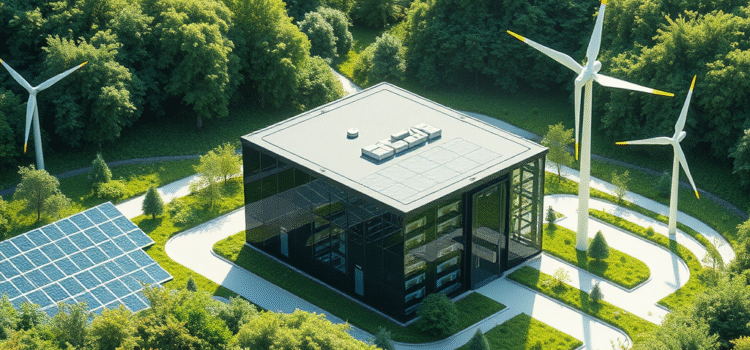
Technology has changed the world — but it’s also heating it.
From massive data centers consuming megawatts of energy to crypto mining operations rivaling small nations, the digital revolution has come with an environmental cost.
But the next wave of innovation isn’t about faster chips or smarter machines — it’s about sustainable intelligence.
The future belongs to tech that doesn’t just power economies — it preserves the planet.
⚙️ The Hidden Carbon Cost of Innovation
The devices and platforms that drive our lives — smartphones, AI models, cloud systems — all leave behind a massive carbon footprint.
The Numbers Are Staggering:
- The global ICT industry produces 3–4% of total CO₂ emissions — more than aviation.
- Training one large AI model can emit as much carbon as five cars over their entire lifetimes.
- Data centers already consume over 2% of global electricity, and the number is climbing.
As the world becomes more connected, the infrastructure behind it must become more sustainable.
🌍 Green Computing: The Next Frontier
“Sustainable technology” isn’t a buzzword — it’s a requirement for survival.
The goal is simple:
Build digital systems that minimize energy use, maximize efficiency, and offset what they consume.
How Green Computing Works:
- Energy-efficient hardware: Chips and servers designed for low power consumption.
- Renewable data centers: Solar, wind, or hydro-powered facilities.
- Heat recycling: Using waste heat from servers to warm buildings.
- Edge computing: Reducing data transmission and centralized processing load.
- Carbon tracking: Using blockchain to monitor and offset emissions transparently.
Every watt saved is a step toward a sustainable digital ecosystem.
♻️ The Rise of ESG Tech
Environmental, Social, and Governance (ESG) standards are transforming how corporations and investors view technology.
In 2025, sustainability isn’t just a moral stance — it’s a competitive advantage.
ESG Tech Focus Areas:
- Green Data Infrastructure – Renewable-powered networks and low-emission devices.
- Sustainable AI – Smaller, optimized models with lower energy demands.
- Circular Hardware Economy – Recycling and reusing components to reduce e-waste.
- Tokenized Carbon Offsets – Blockchain-based transparency for emissions reduction.
- Responsible Mining & DeFi – Blockchains designed with carbon-neutral consensus.
Tech giants, startups, and blockchains are all being forced to prove — not just claim — their environmental impact.
🔗 Blockchain’s Role in Building a Greener World
Ironically, blockchain — once criticized for its energy use — is now becoming part of the climate solution.
Here’s How:
- Tokenized Carbon Credits: Turning verified carbon offsets into on-chain assets.
- Transparent Emission Tracking: Immutable ledgers record every unit of energy consumed or saved.
- Green DeFi Models: Incentivizing sustainable projects through staking and yield mechanisms.
- Smart Energy Grids: Using blockchain to manage decentralized renewable energy production and distribution.
Blockchain brings accountability to sustainability — ensuring that “green” claims can’t be faked or manipulated.
💡 Enter Vector Smart Chain (VSC): The Carbon-Accountable Blockchain
Vector Smart Chain (VSC) is pioneering the next generation of sustainable blockchain infrastructure.
It’s built on the idea that innovation and responsibility shouldn’t be opposites.
Why VSC Stands Out:
- Flat-rate $4 gas model: Predictable fees prevent energy-intensive bidding wars.
- Carbon offset tokenization: Every on-chain activity can be paired with verifiable offset tokens.
- Green enterprise integrations: Designed for RWA (real-world asset) projects focused on carbon credits and renewable initiatives.
- Partnerships with energy and automotive sectors: Building tools for transparent emissions accounting.
💡 Example: A car manufacturer could record every stage of its carbon offset program directly on VSC — from factory output to verified carbon credit redemption — creating a permanent, auditable sustainability record.
🔋 Decentralized Sustainability: The Future of Climate Accountability
The beauty of blockchain-based sustainability is that it’s trustless — it doesn’t rely on self-reporting.
When emissions and offsets are tracked on-chain, greenwashing disappears.
This decentralized approach can be extended across:
- Energy markets (peer-to-peer renewable trading)
- Supply chains (verifying sustainable sourcing)
- Government programs (transparent carbon policies)
- Enterprise audits (publicly verifiable ESG compliance)
The result?
A global sustainability ledger where every transaction, product, or service carries its true environmental cost.
🧠 The Role of AI and Automation
AI will play a massive role in the shift to sustainable tech — but only if managed responsibly.
Key AI Applications in Green Tech:
- Predictive energy optimization: Reducing waste in factories, cities, and homes.
- Smart agriculture: AI-managed irrigation and crop rotation for reduced emissions.
- Automated ESG audits: Real-time monitoring of corporate sustainability data.
- DeFi sustainability modeling: AI-driven yield balancing to fund verified green projects.
When paired with blockchain, these systems become transparent and enforceable, turning sustainability from an abstract goal into measurable impact.
🌱 The Path Forward: Tech That Regenerates
Sustainable technology isn’t just about minimizing harm — it’s about creating regenerative systems.
Imagine:
- AI that designs renewable infrastructure autonomously.
- Blockchains like VSC tracking carbon credits across industries in real time.
- IoT networks optimizing power grids without human input.
- Smart contracts rewarding citizens for eco-friendly behavior.
We’re entering an age where technology doesn’t just consume resources — it actively restores them.
That’s the essence of regenerative innovation.
🧠 WTF Does It All Mean?
The digital revolution doesn’t have to come at Earth’s expense.
The same tools that built our modern world — AI, blockchain, automation — can now protect it.
The next great frontier isn’t just technological — it’s ethical.
It’s about building systems that are as sustainable as they are intelligent.
With platforms like Vector Smart Chain, we’re moving toward a future where every transaction, process, and innovation contributes to both economic and environmental growth.
Because the real measure of progress isn’t speed — it’s sustainability.
TL;DR:
Sustainable technology is redefining innovation through green computing, renewable infrastructure, and blockchain transparency. Platforms like Vector Smart Chain lead this shift by tokenizing carbon offsets, enabling verifiable sustainability, and aligning tech growth with environmental responsibility.
Key Takeaways
- 1Digital technologies like AI and large data centers create a significant global carbon footprint.
- 2Green computing aims to reduce energy consumption through efficient hardware and renewable power sources.
- 3ESG standards are increasingly driving corporations to prioritize sustainability for competitive advantage.
- 4Blockchain enables transparent tracking of emissions, preventing greenwashing through immutable data ledgers.
- 5Sustainable innovation requires integrating blockchain, AI, and efficient infrastructure to create regenerative systems.
Frequently Asked Questions
What is the primary environmental impact of current digital technology?
How can blockchain technology help improve environmental sustainability?
What is green computing and why is it important?
What role does Vector Smart Chain (VSC) play in sustainable tech?
Related Glossary Terms
Emission
Emission refers to the scheduled release of new cryptocurrency tokens into the network, typically as a reward for participants who secure or maintain the blockchain. This usually occurs through consensus mechanisms like Proof of Work mining or Proof of Stake staking rewards. The emission rate defines how many tokens are introduced to the ecosystem over time and is governed by the protocol's underlying code to ensure predictable and transparent distribution.
Mining
Mining is the energy-intensive process of securing a Proof of Work blockchain by verifying transactions and creating new blocks. This computational process involves hashing data to find a valid solution to a cryptographic puzzle defined by the network's current difficulty level. By performing this labor, miners ensure that all transaction history remains unalterable. This mechanism serves as a decentralized substitute for traditional financial intermediaries, ensuring trust is maintained through mathematics and economics rather than institutional oversight.
Redemption
The process of exchanging a token for its underlying asset, collateral, or reference value under issuer or protocol rules.
Ledger
A ledger is a systematic record of all financial or data transactions within a network. In the context of blockchain, it is a distributed ledger, meaning that every node participating in the network maintains an identical copy of the database. This ledger is updated in real-time through consensus, ensuring transparency and accountability. It provides a chronological, immutable record of every action taken within the system, replacing the need for traditional, centralized bookkeeping.
Keep learning
Explore more in Technology