
Web3 promised freedom, ownership, and financial empowerment.
And it delivered all of that.
But it also created the perfect environment for scams.
Not because blockchain is broken —
but because responsibility shifted to the user, and nobody explained what that actually meant.
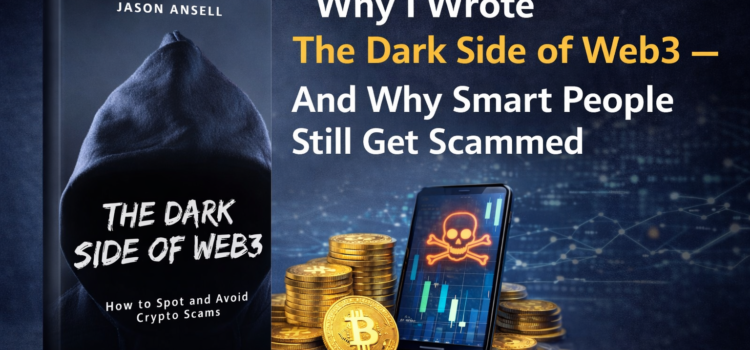
That’s why I wrote The Dark Side of Web3.
The Hard Truth About Crypto Scams
Most people assume crypto scams only work on:
- beginners
- careless users
- people chasing hype
That’s wrong.
Some of the most intelligent, experienced people in Web3 have been scammed — not because they were reckless, but because scams in crypto don’t look like scams at first.
They look like:
- legitimate presales
- trusted influencers
- polished websites
- familiar interfaces
- urgency disguised as opportunity
In a system where transactions are irreversible, one mistake can be permanent.
The Real Problem Isn’t Scams — It’s Pattern Blindness
Most content talks about scams as isolated events:
“This rug pull happened.”
“That wallet drainer stole funds.”
That approach doesn’t help anyone.
Scams succeed because they follow repeatable psychological and technical patterns — and once you can recognize those patterns, most scams become obvious before money is lost.
This book isn’t about horror stories.
It’s about pattern recognition.
What The Dark Side of Web3 Actually Teaches
This isn’t a fear-based book.
It’s a defensive education manual for anyone operating in Web3.
Inside, readers learn:
🧠 Why Decentralization Changes the Rules
How trust shifts from institutions to individuals — and how scammers exploit that shift.
🧬 The Universal Anatomy of Crypto Scams
Why rug pulls, Ponzi schemes, fake presales, and phishing attacks all follow the same underlying structure.
🎭 How Scams Really Work
Including:
- rug pulls & liquidity traps
- yield and staking scams
- phishing & wallet drainers
- impersonation and influencer scams
- social-engineering attacks
🧪 Why Smart People Still Fall for Them
And why intelligence alone doesn’t protect you.
🔍 A Simple Due-Diligence Framework
How to evaluate projects before you connect a wallet or send funds.
🔐 Practical Wallet Security Habits
Small changes that dramatically reduce risk.
🧯 What To Do When Something Goes Wrong
How to respond, recover, and avoid repeating the same mistake.
Who This Book Is For
This book is for:
- beginners entering crypto for the first time
- investors who want to protect capital
- builders operating in public ecosystems
- anyone tired of learning lessons the expensive way
It’s not about avoiding Web3.
It’s about participating without becoming the exit liquidity.
The Core Message
You don’t need to be technical.
You don’t need to be paranoid.
You just need to know what to look for.
In a trustless system, education is the strongest form of security.
Available Now
📘 Paperback & Kindle Editions
Key Takeaways
- 1Web3 shifts security responsibility to the user, making education the most effective form of personal protection.
- 2Crypto scams often mirror legitimate opportunities, making them difficult to distinguish without specific, defensive knowledge.
- 3Learning to identify the structural patterns behind rug pulls and phishing is more effective than studying isolated incidents.
- 4Effective due diligence and basic wallet security habits are essential for participating safely in decentralized ecosystems.
Frequently Asked Questions
Why does the decentralization of Web3 increase individual risk?
Why do experienced and intelligent people fall for crypto scams?
What is the concept of pattern recognition in the context of Web3 security?
Related Glossary Terms
Rug Pull
A rug pull is a malicious maneuver where crypto developers abandon a project and run away with investors' funds. This typically happens in decentralized finance (DeFi) projects, where developers create a token, list it on a decentralized exchange, and lure in investors. Once the liquidity pool reaches a sufficient size, the developers withdraw all the paired liquidity (the 'rug'), causing the token's value to crash to zero and leaving investors with worthless assets.
Phishing
Phishing is a social engineering attack where malicious actors impersonate legitimate platforms, services, or individuals to deceive users into disclosing sensitive information, such as private keys, seed phrases, or login credentials. In the crypto sector, phishing is highly sophisticated; attackers often create fake websites, send fraudulent emails, or use social media bots to trick users into signing malicious transactions that drain their wallets.
Wallet Security
Wallet security encompasses the comprehensive set of practices and technologies used to protect private keys from unauthorized access, theft, or loss. This includes implementing robust backup strategies, utilizing hardware security modules, enabling multi-factor authentication, and maintaining strict digital hygiene to prevent malware, phishing, and social engineering. Effective security relies on the principle that the private key is the ultimate target; therefore, defense-in-depth strategies are required to keep it offline and isolated.
Keep learning
Explore more in Publishing